
All About Sundials
Sundials – the earliest Timekeeper
For thousands of years, long before the invention of mechanical clocks, humans looked to the sky to measure the passage of time. Among the earliest and most enduring timekeeping tools is the sundial
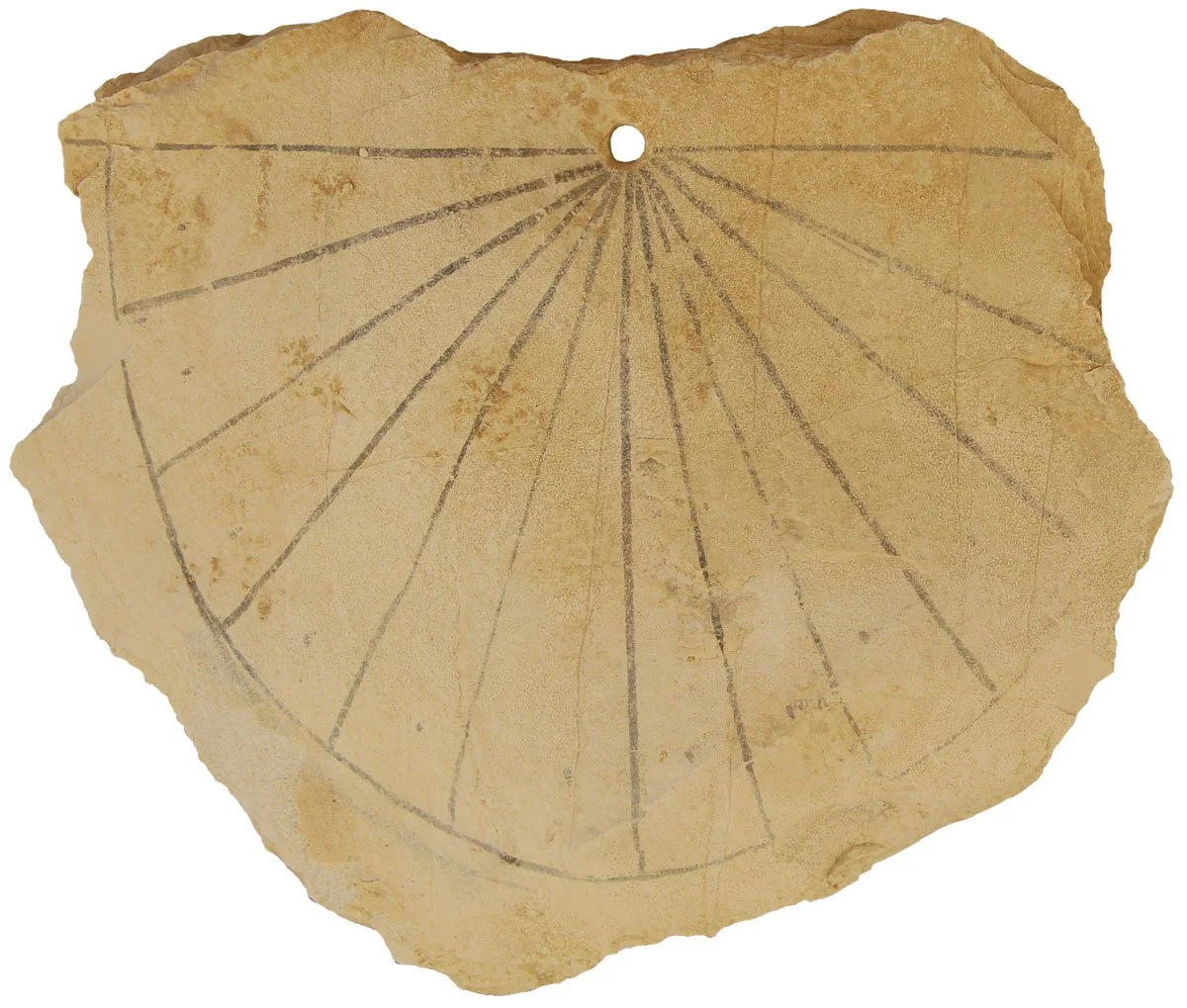
The origins of sundials can be traced back to the ancient Egyptians, who first divided the day into segments using simple shadow-casting devices. Over time, sundials evolved in complexity and precision with equatorial and horizontal designs becoming common across cultures.
How does a sundial work?
Sundials use the changing shadow that is cast by the sun as it progressively moves across the sky during the day. Of course, we know it's not the sun moving, it's the earth rotating on its axis.
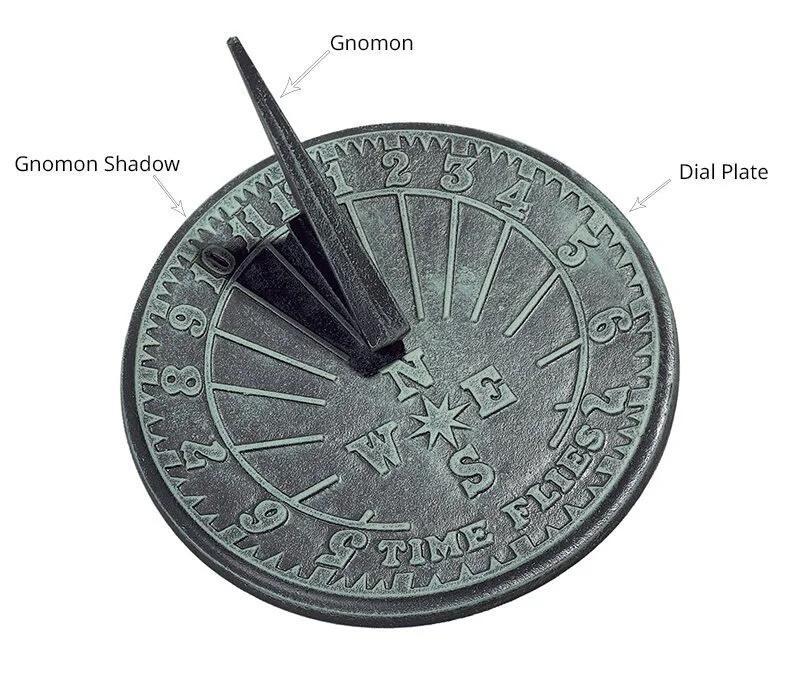
There are two main parts to a sundial:
the gnomon – the part that stands up off the face of the sundial and casts a shadow
the dial face – usually divided into equal parts to mark each hour
As the sun moves position throughout the day, the shadow cast by the gnomon also changes. Its slow progression around the dial shows the movement of time (roughly one degree every four minutes).
Which way should a sundial point?
In the northern hemisphere, the sundial should point towards the north. The angle and placement of the gnomon are carefully calculated to align with the Earth’s axis, allowing the sundial to track solar time accurately throughout the year for its exact location.
Sundial time (solar time) and clock time
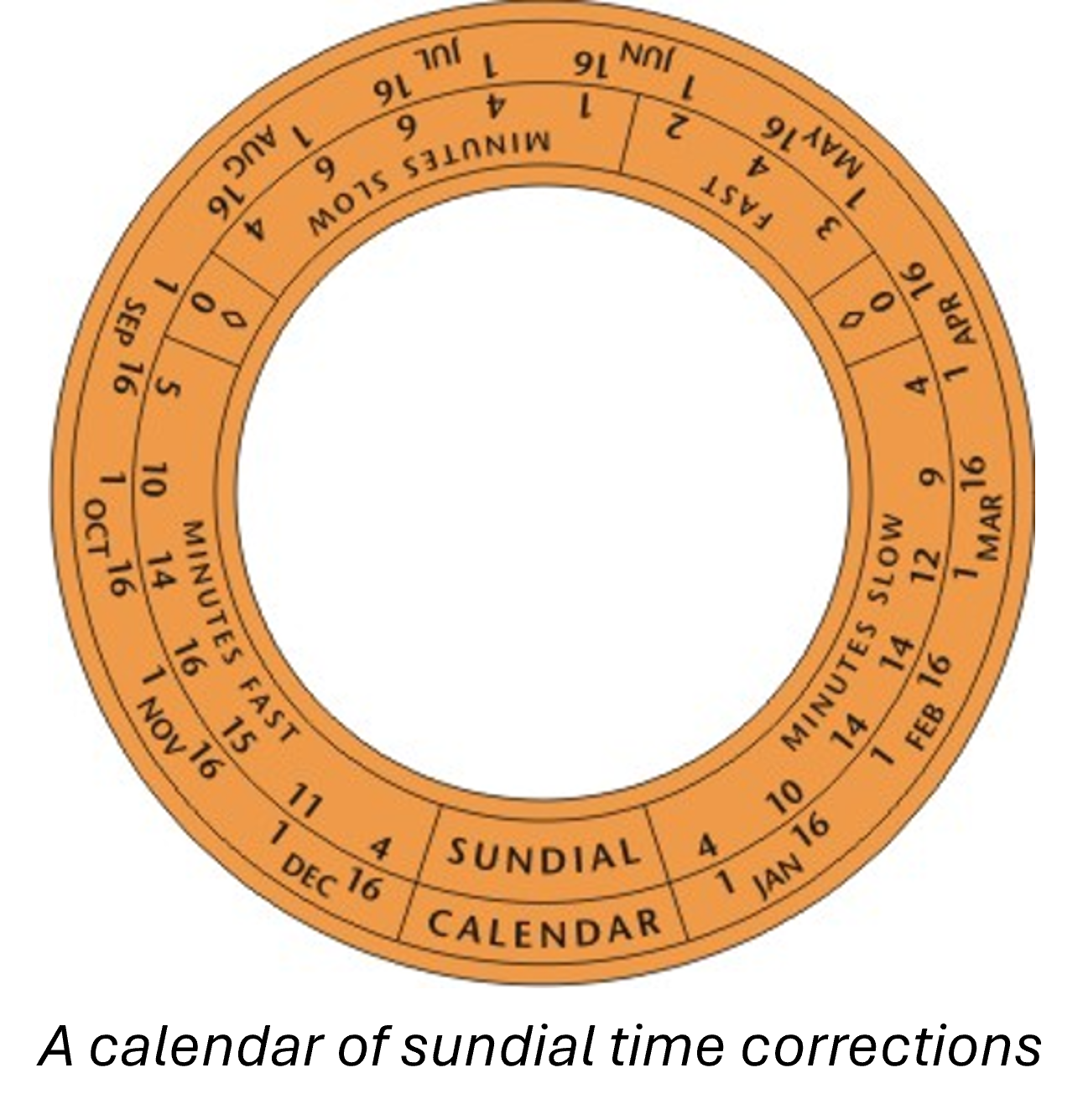
Sundials measure exactly how the sun travels across the sky, but although this movement is smooth, it is not quite regular. When compared with the hours on the clock, the sun will be slightly behind early in the year and later will slip ahead.
Why the Difference Happens
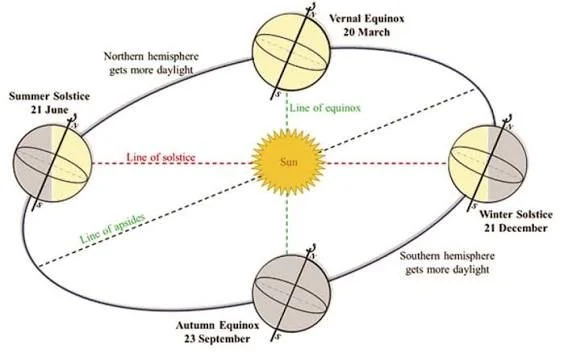
The Tilt: The Earth does not stand straight up. It tilts at an angle.
The Orbit: The Earth moves faster when it is close to the sun. It moves slower when it is far away.
Solar Noon: The sun does not cross the sky at the exact same speed every day.
What the Differences Look Like
Fast and Slow: A sundial can be up to 16 minutes fast or 14 minutes slow.
Four Zero Days: They match clock time on April 15, June 14, September 1, and December 25.
Biggest Gaps: The largest gaps happen near February, May, July, and November.
Analemmatic Sundials
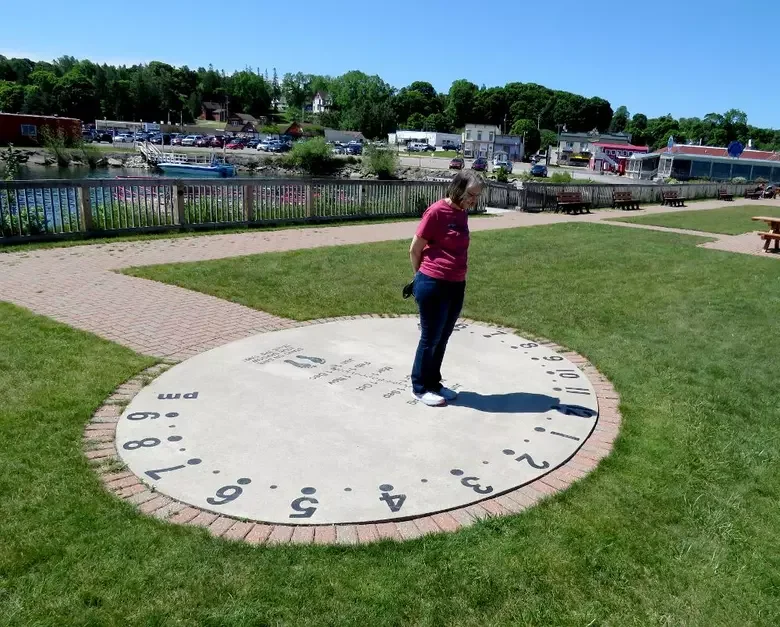
The analemmatic sundial is also called the "living" sundial, because the time is only displayed when a person acts as a gnomon and casts a shadow. The person stands in the middle of the sundial ellipse on the corresponding date and the shadow immediately shows the time at the hour points. There are no hour lines, only hour points, as the direction from the gnomon to the hour point changes seasonally.
Analemmatic sundials also show the sunrise and sunset points. With these you can determine the direction and time of sunrise and sunset for a specific date. Contrary to what is proverbially said, the sun only rises in the east and sets in the west exactly on two days of the year, namely at the beginning of spring and autumn. On the summer solstice, on the other hand, it rises in the north-east and sets in the north-west, and on the winter solstice it rises in the south-east and sets in the south-west.